
Nylon vs Polyester Leggings: Which Fabric Is Right for Your Brand?
Almost every legging is made from nylon or polyester blended with spandex. The choice shapes how your leggings feel, perform, print and cost. This guide compares the two from the factory side, using the fabrics we work with every day.
- Nylon-spandex: softer, smoother and more durable; ideal for yoga, studio and premium leggings.
- Polyester-spandex: dries fast, takes prints well and costs less; ideal for printed, high-sweat or value lines.
- Spandex content sets the stretch and compression in both.
- Recycled versions of both are available.
How nylon and polyester compare
| Nylon-spandex | Polyester-spandex | |
|---|---|---|
| Hand feel | Soft, smooth, often described as buttery | Smooth and slightly crisper; can be brushed for softness |
| Stretch and recovery | Excellent with spandex | Very good with spandex |
| Moisture and drying | Absorbs a little more water; dries more slowly | Absorbs less water; dries fast |
| Durability | High abrasion resistance | Good |
| Printing | Mainly solid colors | Well suited to custom prints |
| Cost | Usually higher | Usually lower |
| Typical use | Yoga, studio, lifestyle and premium leggings | Printed, high-sweat training and value-focused leggings |
Nylon-spandex leggings
Nylon is the fiber behind most premium leggings. It feels soft and smooth against the skin, stretches and recovers well, and resists abrasion from repeated wear and washing. It usually costs more than polyester. We use three main nylon blends, all around 220 gsm:
- 75% nylon / 25% spandex: a soft, second-skin feel for yoga and lounge leggings.
- 78% nylon / 22% spandex: smooth, opaque and supportive for everyday studio and gym leggings.
- 70% nylon / 30% spandex: extra stretch and compression for sculpting and flare styles.
Polyester-spandex leggings
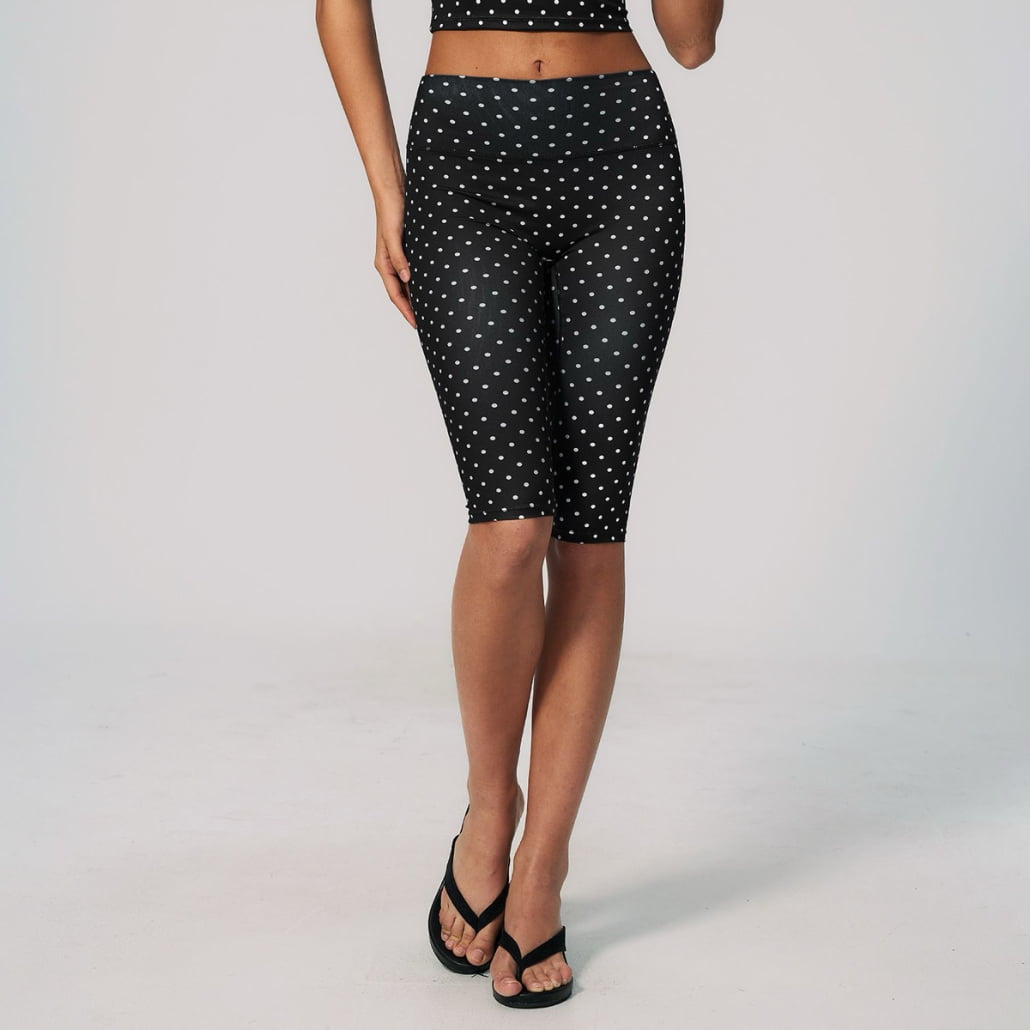
Polyester absorbs less water than nylon, so it dries fast and suits high-sweat training. It holds color well and is the usual choice for custom prints, and it generally costs less. Our main polyester blend is 80% polyester / 20% spandex at around 220 gsm, used for printed and value-focused leggings.
Why the spandex percentage matters
Spandex (also called elastane or Lycra) provides the stretch and recovery in both fabrics. More spandex means more stretch and stronger compression, which suits sculpting styles; less spandex gives a lighter, easier feel. That is why we offer nylon blends from 22% to 30% spandex, and why the right percentage depends on how you want the leggings to fit.
When to choose nylon
- Your brand focuses on yoga, pilates, studio or lifestyle wear.
- Customers expect a soft, premium, second-skin feel.
- You want solid colors and a smooth, matte look.
- Your price point supports a higher fabric cost.
When to choose polyester
- You want custom prints or patterns.
- Your customers train hard and sweat a lot, for example in gym wear or running ranges.
- You need a sharper price point.
- You want a durable, easy-care fabric for a wide range of colors.
Recycled nylon and recycled polyester
Both fibers are available in recycled versions, made from pre- or post-consumer waste. GRS-certified recycled nylon and polyester fabrics are available for collections that need verified recycled content. See our recycled materials page.
What about seamless leggings?
Seamless leggings are knitted from yarn rather than cut from fabric. Ours are mainly knitted from 90% nylon / 10% spandex, with the stretch and compression coming partly from the knit structure. See seamless vs cut and sew.
Does the fiber affect squat-proofing and cost?
Both nylon and polyester leggings can be squat-proof; opacity depends more on knit density, weight, color and fit than on the fiber. Read our squat-proof fabric guide. Fabric is usually the largest part of a legging’s cost, so the choice between nylon and polyester has a direct effect on your price; see our leggings cost guide.
How to choose for your brand
- Start with your customer: what activity, and what feel do they expect?
- Decide on prints: printed collections point to polyester.
- Check your price point against the fabric cost.
- Sample both if you are unsure. Samples cost US$10–15 per style, refunded on bulk orders, so comparing two fabrics side by side is a small investment.
Explore our custom leggings and yoga wear pages for styles in both fabrics.
Frequently asked questions
Is nylon or polyester better for leggings?
Neither is better for every brand. Nylon-spandex is softer and smoother and suits yoga and premium lines; polyester-spandex dries fast, takes prints well and suits printed or value-focused lines.
Which is softer, nylon or polyester leggings?
Nylon-spandex usually feels softer and smoother against the skin, which is why it is popular for yoga and lifestyle leggings.
Which dries faster, nylon or polyester?
Polyester absorbs less water than nylon, so polyester-spandex leggings usually dry faster after sweaty training or washing.
Which fabric is best for printed leggings?
Polyester-spandex. It is well suited to custom prints, which is why most printed leggings are made from polyester blends.
Are nylon leggings more expensive than polyester leggings?
Usually, yes. Nylon-spandex fabrics generally cost more than polyester-spandex fabrics of a similar weight.
Can I make leggings from recycled nylon or polyester?
Yes. GRS-certified recycled nylon and recycled polyester fabrics are available for more sustainable collections.
Not sure which fabric to choose?
Tell us the feel, activity and price point you are aiming for. We recommend fabrics and reply with a quote within 24 hours. Only your work email is required.
- A tech packShare technical drawings, measurements and material requirements.
- A reference productShare a photo, product link or sample, with the details you want to develop.
- An early ideaDescribe the category, intended activity and wearing experience.