
How to Check Sports Bra Support Across Sizes
A sports bra can pass a fit test in size M and still fail your customers in XL. Support does not scale automatically. This guide shows which sizes to test, what to change as sizes grow, and how to run and record a wear test before bulk production.
- One tested size proves one size. Check both ends of your range.
- Grade widths as well as lengths, especially the underband and straps.
- Start with the underband. It should do most of the work, not the straps.
- Test with movement, using people who wear each size.
- Record results by size, and retest after washing.
Why support changes across a size range
A larger size has more weight to control, but a standard grade mainly makes pattern pieces longer and wider. If the same strap, elastic and fabric carry over from the base size, the bra can lose support as sizes go up. Small sizes can have the opposite problem: a band or strap that feels too firm or sits in the wrong place.
Most activewear bras use garment sizes such as S, M and L, rather than band and cup sizes. That means one size has to fit a range of bodies, so it is worth testing more than one person where you can. For choosing a support level in the first place, see our guide to sports bra support levels.
| Part | What to review in larger sizes | What can go wrong |
|---|---|---|
| Underband | Height, elastic strength and tension | Rides up or loses its hold |
| Straps | Width, position and stretch | Dig in, slip or stretch out |
| Front and coverage | Neckline height, armhole shape and side coverage | Spill at the top or sides |
| Lining | Layers, stretch and tension | Bags or pulls against the outer fabric |
| Pads | Pad size for each garment size | Fold, shift or leave gaps |
| Back | Back width and any closure | Rides up or feels unstable |
Choose which sizes to test
You do not always need a sample in every size, but you do need to see the extremes. Plan a small size set before you approve bulk production:
| Size to test | Why it matters |
|---|---|
| Base size, often S or M | Confirms the design and the main pattern |
| Smallest size | Shows if the band, straps and pads still sit correctly |
| Largest size | Shows if support holds under the most load |
| Any size where the construction changes | Confirms the step between two size groups |
For a range of XS–XL, that could be XS, M and XL. For a range up to 3XL, add a plus size as well, because that is usually where a straight grade starts to fail.
Grade widths, not only lengths
Larger sizes usually need wider bands and straps to give the same support. Instead of changing every size by the same small amount, many brands split the range into size groups and adjust the construction for each one.
| Size group | What may change |
|---|---|
| Smaller sizes | Base strap width and band height, with a closer look at neckline and armholes |
| Larger core sizes | Wider straps, a higher or firmer underband, more front and side coverage |
| Plus sizes | A separate review of the pattern, lining, elastic and straps, not just a larger copy |
The right values depend on your fabric, style and support level, so treat this as a starting point and confirm it by testing. Write each width into the grading chart in your sports bra tech pack, and measure elastic areas both relaxed and extended.
How to run a wear test by size
Each tester should wear the size that fits them. A bra tested on the wrong body tells you very little.
- Check the fit standing still. The underband should sit level and feel firm, and the straps should not dig in.
- Raise the arms. The band should stay down, and the front should stay in place.
- Add movement. Walk, jog, jump and bend, according to the support level you are claiming.
- Do a real session. Wear it for the activity it is designed for, long enough to warm up.
- Record it straight away. Use the same questions and the same scoring for each size.
Researchers at the University of Portsmouth’s Research Group in Breast Health advise that the main support should come from the underband rather than the straps. This makes the underband a good place to start your check.
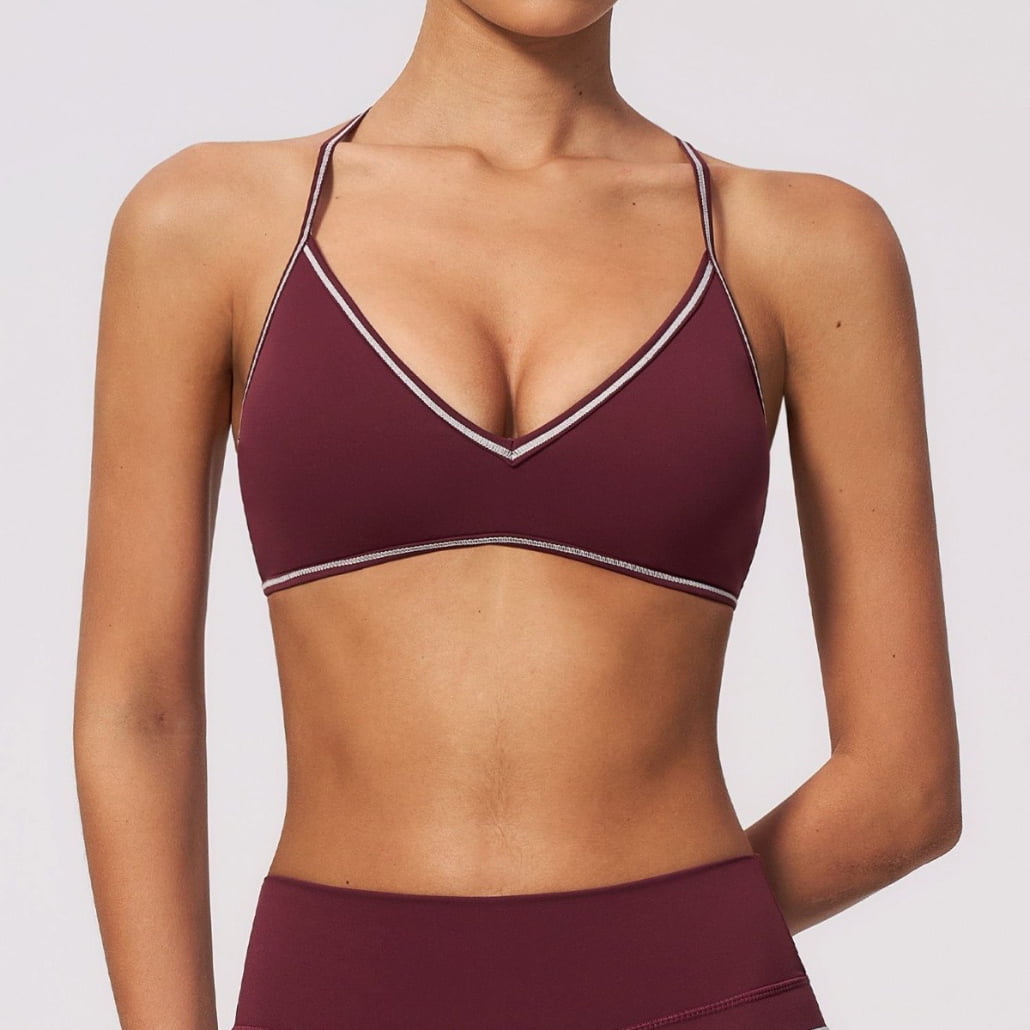
Common fit problems and what to review
| Problem | Possible cause | What to review |
|---|---|---|
| Underband rides up | Band too loose, or too much pull from the straps | Band length, elastic and strap balance |
| Straps dig in | Straps carrying too much load, or too narrow | Underband firmness and strap width |
| Too much bounce | Not enough hold for the activity | Fabric, layers, underband and front shape |
| Spill at the top or sides | Not enough coverage for that size | Neckline, armhole and side height |
| Armholes rub | Elastic too tight, or the binding is too firm | Armhole shape and elastic tension |
| Pads shift or fold | Pad or pocket size does not suit the garment size | Pad size per garment size, and pocket opening |
| Lining bags or pulls | Lining and outer fabric stretch differently | Lining fabric and how it is attached |
Record results by size
Notes such as "feels good" are hard to compare. A simple scoring sheet makes differences between sizes easy to see:
| Check | What to record |
|---|---|
| Sample and tester | Sample round, garment size, and the tester’s usual size |
| Activity | What the tester did, and for how long |
| Support | Score from 1 to 5 for bounce and overall hold |
| Fit | Score for underband, straps, coverage and pads |
| Comfort | Any rubbing, digging or pressure points |
| Decision | Pass, change or retest, with the reason |
Compare the sheets side by side. If one size scores lower than the others, review that size rather than changing the whole range.
Retest after washing
A new bra can feel firmer than one that has been worn and washed. Wash your key sizes according to the care label, then check them again. Look at the underband, strap stretch, elastic recovery and whether the pads still sit flat. Repeat the movement test, because a bra that only works when new will disappoint your customers.
Seamless and plus sizes
Cut & Sew sports bras can be made in XXS–XL, with plus sizes up to 3XL. Seamless bras are made in XS–XL. Cut & Sew gives you more control over the panels, elastics and linings that larger sizes often need. Seamless support comes more from the knit structure, so check how it stretches across the range. Seamless vs cut and sew compares the two routes, and our sports bra page shows current styles and fabrics.
Sign off the size range
- Each key size has been wear-tested for the activity you are claiming.
- Changes to one size have been checked for their effect on the next size.
- Widths, lengths and pad sizes are in the grading chart.
- The approved sample and any comments are on file.
- Your support claim matches what was tested.
Plan extra time for this. Medium and high-support bras take more development, because the fit has to work across the whole range. The sampling guide explains how rounds work, and our guide to size splits helps you decide how many of each size to order.
Common mistakes
- Testing only the base size.
- Asking a tester to wear a size that does not fit them.
- Grading lengths but keeping every width the same.
- Making the straps tighter to fix a loose underband.
- Checking fit without any movement.
- Keeping results as loose comments rather than by size.
- Skipping the retest after washing.
Frequently asked questions
Why does a sports bra feel supportive in one size but not another?
The load on the bra changes with size. If larger sizes are only scaled up, the underband, straps and front can be too light for the job. Check each end of the range, not only the base size.
Which sizes should I wear-test?
At a minimum, test your smallest size, your base size and your largest size. If you offer plus sizes, also test where the construction or strap width changes.
How many people should test a sports bra?
Use at least one tester per key size, and more if you can, because bodies differ within one size. Each tester should wear the size that fits them, not the sample size.
Do larger sports bra sizes need wider straps?
Usually, yes. Larger sizes usually need wider bands and straps to give the same support. Grade those widths as well as the lengths, then confirm them in a wear test.
How do I test sports bra support during sampling?
Check the fit standing still, then test with movement such as jogging, jumping and reaching overhead. Look for bounce, a band that rides up, straps that dig in and pads that move.
What sizes do you make for sports bras?
Cut & Sew sports bras can be made in XXS–XL, with plus sizes up to 3XL. Seamless bras are made in XS–XL.
Developing a sports bra range?
Tell us the support level, the size range and the activity you have in mind. We review the construction and reply with a quote within 24 hours. Only your work email is required.
- A tech packShare technical drawings, measurements and material requirements.
- A reference productShare a photo, product link or sample, with the details you want to develop.
- An early ideaDescribe the category, intended activity and wearing experience.